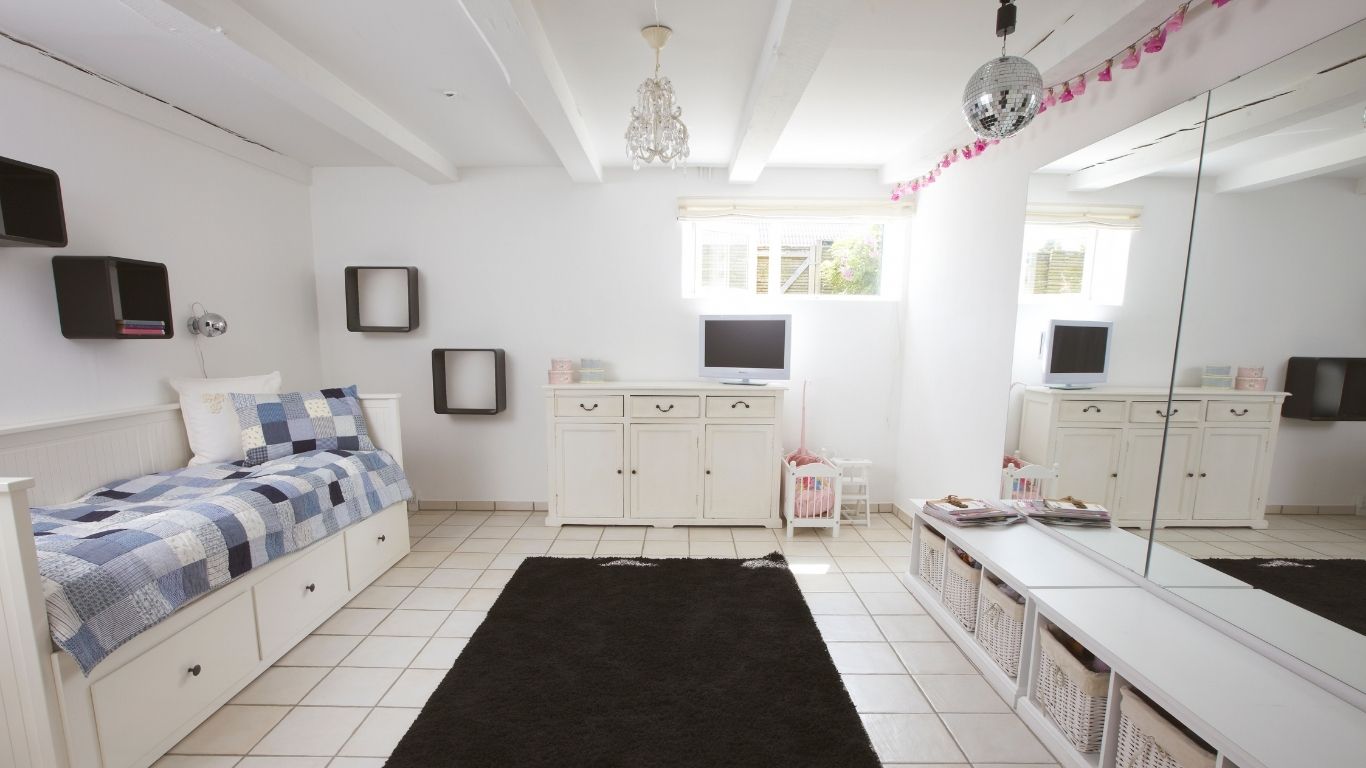
A basement bedroom expands your home’s capacity without building an addition. Whether you need guest accommodations, space for returning adult children, quarters for aging parents, or simply an extra room that increases home value, basement bedrooms solve real problems.
But calling a room a “bedroom” carries specific legal and safety requirements. Pennsylvania building codes exist to ensure that basement sleeping spaces are safe, comfortable, and provide emergency exits. Understanding these requirements before you start prevents costly mistakes and ensures your basement bedroom is actually legal.
Pennsylvania Egress Window Requirements
Every sleeping room needs two exits: the bedroom door and an egress window. This life safety code provides escape routes when fires block primary exits.
Size Requirements
Pennsylvania requires egress windows with a net clear opening of 5.7 square feet minimum (5.0 in some cases). Opening width must be 20 inches minimum, height 24 inches minimum. Window sills can sit no higher than 44 inches above floors. Windows must open from the inside without keys or tools.
Basement windows require window wells with a minimum of 9 square feet of area and 36-inch dimensions. Wells deeper than 44 inches need permanently attached ladders or steps. Proper drainage prevents water accumulation.
Installing egress windows means cutting through foundations (serious structural work requiring professionals). Budget $3,000-7,000 per window, including cutting, window, well, and drainage.
Beyond Egress: Other Requirements
Bedrooms need a minimum of 70 square feet (50 per person for shared rooms). In practice, 7×10 (70 sq ft) barely fits a bed; 10×12+ is more comfortable.
Ceiling height must be 7 feet over 50% of the room area. Portions under beams can dip to 6 feet 4 inches but not exceed half the room.
Bedrooms require heating and cooling connected to your home’s system or dedicated equipment. Closets aren’t code-required but expected functionally.
Making Basement Bedrooms Comfortable
Meeting code makes bedrooms legal. Thoughtful design makes these places people want to sleep.
Light and Atmosphere
Egress windows provide required light, but placement and well-designed affect how much actually enters. Position beds so sleepers can see windows upon waking. This psychological connection to the outside makes basement bedrooms feel less confining.
Paint window wells white or light colors to reflect maximum light into rooms. Dark wells absorb light before it reaches windows. Consider multiple windows if room size allows. Additional standard windows improve light and ventilation beyond code minimums.
Lighting Design
Layer lighting types for flexibility. Overhead lighting provides general illumination. Bedside lamps or sconces provide reading light. Accent lighting creates ambiance.
Install all bedroom lighting on dimmer switches. This allows bright light for dressing and cleaning, with softer light for evening reading and relaxation. Closet lighting improves function. Automatic LED strips that activate when doors open cost little but significantly improve usability.
Sound and Temperature Control
Basement bedrooms often sit below high-traffic areas. Footsteps and activity above create noise that disturbs sleep. Insulation in ceiling joists dampens sound transfer. Solid core doors with proper weatherstripping reduce sound between basement spaces.
Basements naturally run cooler than upper floors. Comfortable in summer but potentially cold in winter, especially for sleeping. Adequate heating ensures basement bedrooms stay comfortable year-round. Don’t undersize heating equipment to save money. Cold bedrooms don’t get used.
Humidity control prevents musty basement feelings. Whole-house dehumidifiers maintain appropriate humidity levels automatically. This particularly matters in bedrooms where sleeping people are sensitive to air quality.
Guest bedrooms work best with separation from main living areas. If possible, locate bedrooms away from entertainment zones or behind doors providing acoustic and visual privacy. Window treatments ensure privacy while maintaining light control. Blackout options help guests sleep regardless of time or outside light levels.
Design Considerations
Light, neutral colors make basement bedrooms feel brighter and more spacious. Whites, warm grays, and soft beiges reflect available light throughout rooms. Consider slightly warmer tones than you’d use upstairs. Basements naturally feel cooler, so warmer colors create psychological warmth, making rooms more inviting.
Carpet provides warmth and comfort underfoot. Choose carpet designed for below-grade installation with appropriate moisture barriers. Carpet tiles offer advantages: individual tiles can be replaced if moisture occurs without ruining entire floors.
Luxury vinyl plank provides durable, waterproof flooring with better moisture resistance than carpet. Area rugs add warmth without moisture risks of permanent carpet.
Scale furniture appropriately for room size. Oversized pieces overwhelm small basement bedrooms. Position beds away from exterior walls when possible. Foundation walls, even when insulated, feel cooler than interior walls. Leave adequate space around beds for making beds and accessing nightstands.
Basement bedroom suites with attached bathrooms provide luxury and independence. Locate bathrooms adjacent to bedrooms. Full baths suit overnight guests and longer-term occupants. Basement bathrooms require sewage ejector pumps below sewer lines.
For multi-generational living, consider accessibility features (wide doorways, lever handles, adequate lighting). Separate entrances and kitchenette areas support independent living.
Your Basement Bedroom Project
Creating legal, comfortable basement bedrooms requires understanding both code requirements and practical considerations that make spaces genuinely livable.
Professional help ensures your bedroom meets all Pennsylvania requirements while incorporating design elements that maximize comfort. We’ve helped families throughout the Lehigh Valley create basement bedrooms that work beautifully.
Ready to add bedroom space to your basement? Contact our team to discuss your project. We’ll assess your basement, explain egress window options, and develop a plan that creates a safe, comfortable sleeping space. Check out our gallery to see bedroom projects we’ve completed. Learn more about our design approach to creating functional, beautiful spaces throughout your home.