A basement bathroom transforms how you use your lower level. It turns storage space into a functional living area that guests can actually use comfortably. But adding a bathroom below your main sewer line presents unique challenges that don’t exist for above-grade bathrooms.
Understanding these challenges before you start prevents costly surprises and ensures your basement bathroom works reliably for years. Let’s walk through what you need to know about basement bathroom installation in Pennsylvania homes.
The Sewage Ejector Pump Challenge
Most Pennsylvania homes have sewer lines at or below the basement floor level. Gravity can’t drain waste upward, so basement bathrooms need sewage ejector pumps.
How They Work
Sewage ejector pumps collect wastewater from basement fixtures in a sealed basin (typically 18-24 inches in diameter, 30 inches deep) buried in the floor. When the basin fills, a submersible pump activates automatically and pushes waste up to your main sewer line. A vent pipe allows gases to escape safely.
Modern systems from manufacturers like Liberty, Zoeller, or Goulds are reliable and relatively quiet.
Installation requires breaking through concrete. The basin sits low enough that fixtures can gravity-feed into it. Place the basin where it can serve all basement plumbing (bathroom, wet bar, laundry) to centralize the system.
The discharge pipe must rise above the basin’s highest water level before running horizontally. Professional installation ensures proper sizing, venting, and code compliance.
Complete systems cost $2,000-4,500. Annual maintenance includes inspecting the float switch and check valve. Alarm systems and battery backups provide extra protection.
Full Bath vs. Half Bath
Half baths (toilet and sink only) take less space (3×6 feet minimum), cost less, require smaller ejector pumps, and work well for entertaining spaces.
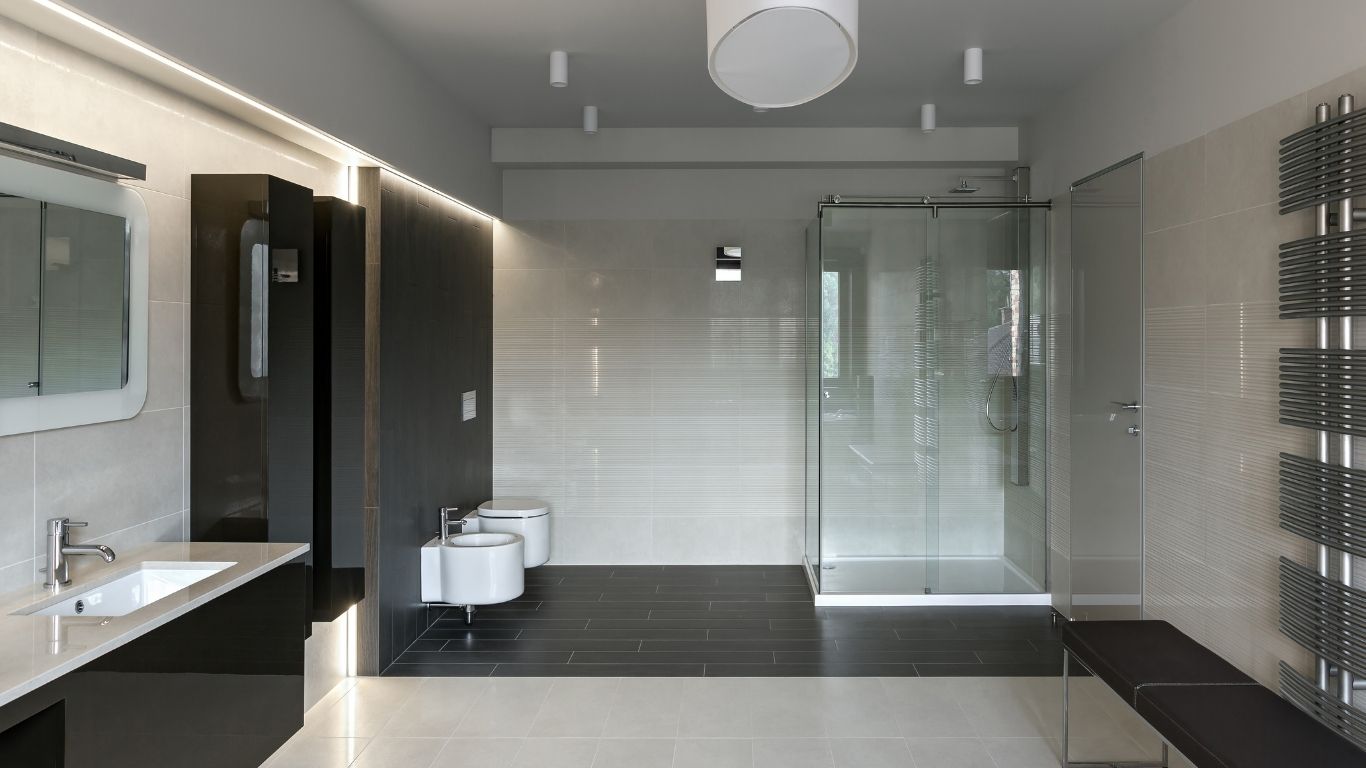
Full baths (toilet, sink, shower/tub) support bedroom suites, accommodate overnight guests, and increase home value more. They need 35-50 square feet minimum (60-75 for comfort).
Layout and Design
Plan layout so the ejector basin’s raised area sits inside the bathroom rather than creating hallway tripping hazards. Some designs incorporate it under shower platforms. Don’t forget the required access panel for maintenance.
Minimize the distance between fixtures and the basin. Wet wall design (all plumbing on one common wall) concentrates plumbing and reduces costs.
Plan adequate clearances: toilets need 15 inches from the center to any wall, sinks benefit from counter space, and showers need elbow room.
Basement bathrooms require exhaust fans venting to the exterior (not just the basement space). Calculate bathroom cubic feet and choose fans providing 8 air changes per hour. Better fans run quietly and include humidity sensors.
Moisture Control and Materials
All shower/tub areas need waterproof membranes behind tile. Don’t assume cement board is waterproof (it resists moisture but isn’t a barrier). Floor drains provide backup protection if toilets leak or pumps fail.
Choose moisture-resistant drywall outside wet areas. Select tile or luxury vinyl flooring. Avoid solid wood cabinetry. Use mold-resistant bathroom paint. Allow clearance between materials and concrete floors for moisture evaporation.
Lighting and Design
Locate bathrooms near windows or where adding egress windows makes sense. Window wells can transform small basement windows into significant light sources.
Without natural light, layer artificial lighting: overhead for general illumination, task lighting at mirrors, and accent lighting for ambiance. Choose damp/wet-rated fixtures. Light colors maximize available light.
Code Compliance
Basement bathroom projects require permits. Licensed plumbers should handle ejector pump installation. Electrical work needs GFCI protection near water. Inspections occur at rough-in (before closing walls) and final stages.
Budget Planning
Basement bathrooms cost more than comparable bathrooms on main floors due to ejector pump requirements and below-grade complications.
Budget $15,000-25,000 for basic half bathrooms, including ejector pump installation. This covers standard fixtures, basic tile work, and necessary permits.
Full bathrooms run $20,000-40,000, depending on size and finishes. Luxury materials, high-end fixtures, and elaborate tile work push costs higher.
Ways to control costs include choosing standard-size fixtures that don’t require custom solutions, using stock cabinetry rather than custom, selecting durable but moderately priced tile, and doing some finish work yourself (painting, for example).
Don’t skimp on the ejector pump system itself. This is infrastructure that must work reliably. Cheap pumps or improper installation create expensive problems.
Making It Work Long Term
A well-designed basement bathroom serves reliably for decades with minimal issues.
Plan for cleaning convenience. Wall-mounted toilets and vanities make floor cleaning easier. Large-format tiles mean fewer grout lines to maintain. Quality fixtures with good finishes resist wear better than budget alternatives.
Consider accessibility features even if not currently needed. Curbless showers, lever handles, and adequate maneuvering space make bathrooms more functional for aging in place.
Maintain your ejector pump system according to manufacturer recommendations. Annual inspections and prompt attention to any issues prevent small problems from becoming disasters.
Your Basement Bathroom Project
Adding a bathroom below grade is more complex than above-grade installations, but the result is worth the additional planning and investment. A well-executed basement bathroom makes lower level space truly functional.
Working with experienced professionals who understand Pennsylvania code requirements and basement-specific challenges ensures your project is completed properly. We’ve installed ejector pump systems and finished basement bathrooms throughout the Lehigh Valley.
Ready to discuss adding a bathroom to your basement? Contact us for a consultation. We’ll assess your specific situation, explain your options, and develop a solution that works with your home’s layout and your budget. Visit our gallery to see bathroom projects we’ve completed.