A basement home gym eliminates commute time, membership fees, and waiting for equipment. You work out on your schedule in complete privacy. No judgment from other gym members. No wiping down equipment someone else just used. Just you, your space, and your fitness goals.
Basements make excellent gym locations when planned properly. Cool temperatures, separation from main living areas, and concrete floors that support heavy equipment all favor gym use. Understanding what makes basement gyms work helps you create spaces you’ll actually use rather than expensive storage for unused equipment.
Essential Gym Requirements
Ceiling Height and Flooring
Check ceiling height carefully. Minimum 8-foot ceilings accommodate most exercises. Lower ceilings limit overhead movements. Account for flooring thickness (adds 1-2 inches).
Gym flooring is the most important element. It protects concrete from dropped weights while providing cushioning and traction.
Rubber remains the gold standard. It absorbs impact, reduces noise, resists moisture, cleans easily, and provides non-slip surface. Forms include interlocking tiles (no adhesive needed, easy removal), mats (maximum cushioning for lifting areas), and rolled rubber (seamless coverage, requires adhesive).
Thickness matters. Half-inch suits cardio and light weights. Three-quarter-inch handles most home use including dropped barbells. One-inch+ protects from Olympic lifting.
Foam tiles cost less but compress over time. They work for yoga and bodyweight exercises, not serious lifting. Vinyl needs rubber underlayment for impact protection. Carpet absorbs moisture/odors and doesn’t protect against weights.
Ventilation and Climate Control
Working out generates significant heat and humidity. Extend HVAC with properly sized supply/return vents. Consider supplemental fans. Dehumidifiers maintain comfortable humidity. Serious users sometimes install mini-split systems for independent temperature control.
Equipment Selection and Layout
Cardio Equipment
Treadmills remain popular despite taking substantial floor space. Budget 3×7 feet minimum for placement, plus clearance behind for safe dismounting.
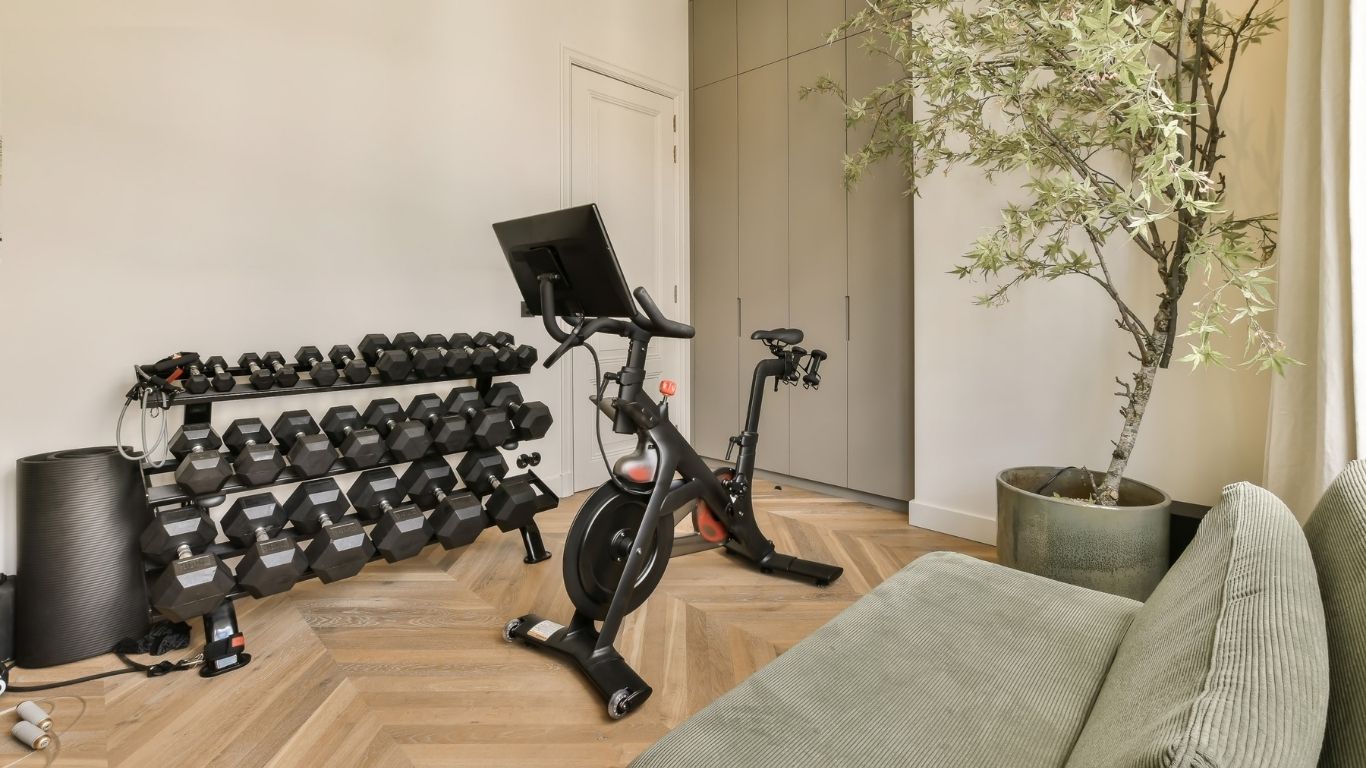
Stationary bikes take less space (2×4 feet typically) while providing effective cardio. These are quieter than treadmills, which matters if your gym sits under living spaces.
Rowing machines deliver full-body cardio in a compact footprint. They store vertically when not in use, saving floor space in smaller gyms.
Elliptical trainers provide low-impact cardio but require more ceiling clearance than other options due to their motion arc.
Strength and Functional Training
Free weights offer maximum versatility in minimum space. Adjustable dumbbells replace entire racks of fixed weights. Barbells with plates serve multiple exercises.
Weight racks organize weights safely while keeping floors clear. Wall-mounted racks minimize floor space consumption.
Power racks or squat stands enable safe barbell exercises, including squats, presses, and pull-ups. These require a substantial footprint (typically 4×6 feet minimum) but enable numerous exercises.
Benches (flat, incline, decline) multiply exercise options for relatively small investment and space.
Resistance bands take minimal space while enabling hundreds of exercises. Suspension trainers mount to ceilings or doors, providing bodyweight training without storage needs. Kettlebells, medicine balls, and slam balls add functional training variety in compact, stackable forms.
Layout Strategies
Zone different activities. Separate cardio from lifting and stretching zones. This prevents interference between exercise types and creates psychological space division.
Position larger equipment first. Treadmills, power racks, and other substantial items anchor your layout. Fill in around these with smaller equipment.
Maintain clear pathways between equipment zones. You should move between areas without squeezing past equipment or tripping over weights.
Face cardio equipment toward the TV or interesting views. Hours on treadmills pass more easily with entertainment. Mirror placement helps check exercise form while making spaces feel larger. Full-length mirrors along one wall serve dual purposes.
Motivation and Atmosphere
Technical requirements get gyms built. Design choices make them spaces you want to use.
Energizing colors motivate workouts. Bold accents in orange, red, or bright blue create a dynamic atmosphere. These work as accent walls or decor rather than painting entire gyms with vivid colors.
Darker neutrals hide dirt and scuffs better than light colors. Charcoal, medium grays, and earth tones show less wear from active use.
Inspirational graphics or messaging keep motivation high. Wall decals with motivational quotes, technique cues, or workout tracking spaces personalize your gym.
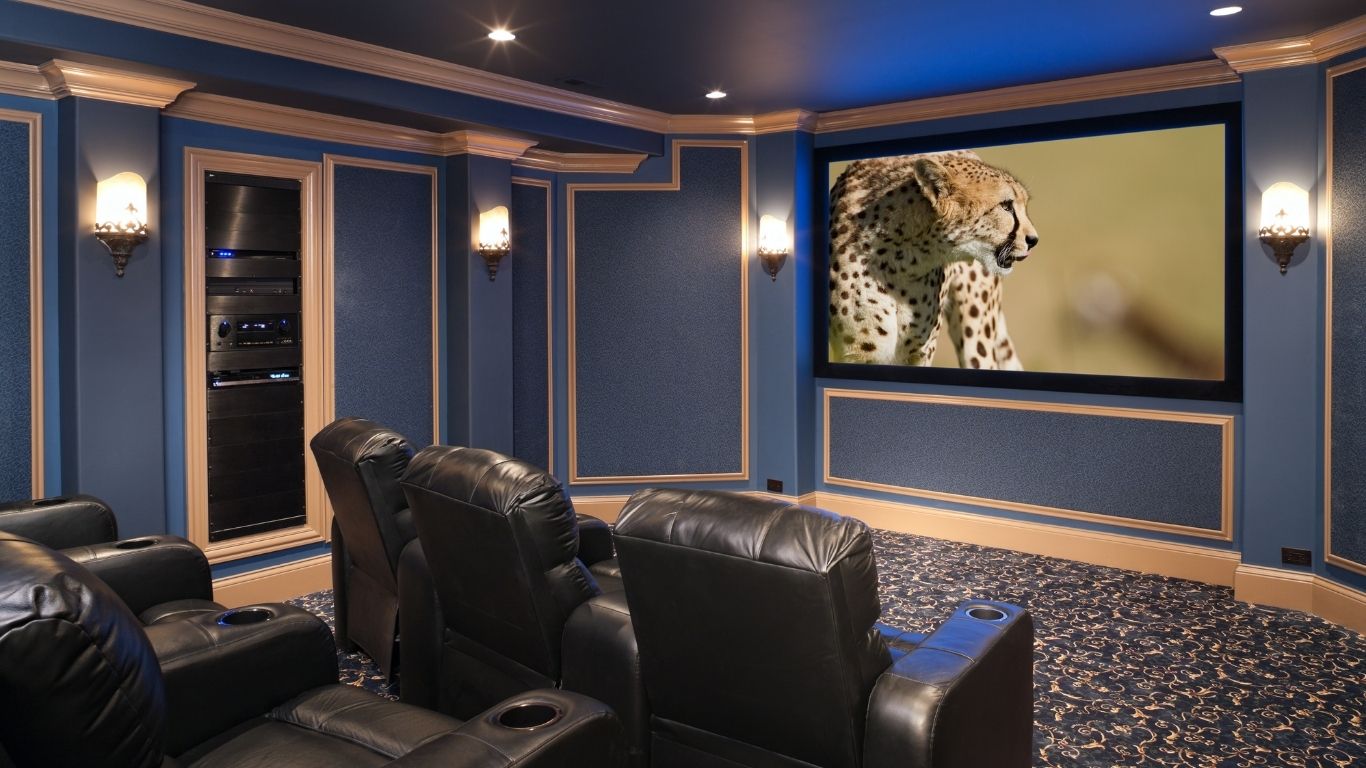
Bright lighting energizes workouts. Unlike basement theaters that need darkness, gyms benefit from abundant light, making spaces feel alive.
If possible, locate gyms near windows providing natural light. This dramatically improves the atmosphere and mood during workouts.
LED high-bay fixtures provide bright, efficient lighting for windowless gyms. Choose a color temperature around 4000-5000K (bright white) mimicking daylight.
Music makes workouts better. Built-in speakers provide better sound than portable options while keeping floors and equipment surfaces clear. Bluetooth connectivity lets you control music from your phone without walking to the stereo between exercises.
Special Considerations and Budget
Olympic lifting platforms (8×8 feet) protect floors and bars. Heavy bags require a proper ceiling structure or freestanding stands. Saunas/cold plunge additions require electrical/gas connections, ventilation, plumbing, and drainage.
Basic gyms (quality flooring, free weights, simple cardio) start at $2,000-5,000. Mid-range gyms cost $8,000-15,000. High-end gyms exceed $20,000-30,000. Prioritize flooring and climate control over equipment initially.
Making It Sustainable
The best gym is the one you actually use. Several factors determine whether home gyms become regular workout spaces or expensive equipment storage.
Convenience beats everything. If your gym is unpleasant (too cold, poorly lit, cluttered), you’ll find excuses to skip workouts. If it’s welcoming and comfortable, you’ll use it regularly.
Make it easy to start workouts. If you have to move things, set up equipment, or search for accessories, friction prevents workouts. Design for instant access to everything you need.
Keep it clean and organized. Set aside time weekly to wipe equipment, sweep floors, and return everything to proper storage. Gyms that look neglected become neglected.
Consider hiring a trainer initially. Even one or two sessions creating workout plans for your specific equipment helps you use the gym effectively rather than wandering aimlessly between machines.
Your Basement Gym Journey
A well-designed basement gym changes your fitness routine fundamentally. No more excuses about the gym being closed, crowded, or far away. Your gym is always open, always available, always yours.
Professional planning ensures your investment supports your fitness goals rather than becoming expensive storage. Our renovation approach addresses both functional requirements and design elements that make spaces you want to use.
Ready to create your home gym? Contact us to discuss your fitness goals and space requirements. We’ll assess your basement and develop a plan that creates a gym you’ll use for years. Check our gallery to see projects we’ve completed. Learn about our design process and how we create spaces tailored to how you actually live.