A dedicated basement home theater delivers cinema-quality experiences without leaving home. No more planning around showtimes, dealing with crowded theaters, or paying premium prices for popcorn. Your basement can become the entertainment destination your family and friends actually prefer.
Basements make ideal theater locations. They’re naturally dark with minimal windows, separated from household noise, and easier to soundproof than main floor spaces. Understanding what makes home theaters work helps you create spaces that deliver immersive experiences worth the investment.
Why Basements Work for Home Theaters
Location matters significantly for home theater success. Basements offer advantages that other rooms can’t match.
The dark basement locations provide an elimination of light pollution that ruins picture quality. Even small amounts of ambient light wash out projected images and reduce contrast ratios that create cinematic depth. Basements start with this advantage built in.
Sound isolation comes easier in basements. You’re starting with concrete walls and floors that block sound better than typical interior walls. Distance from bedrooms and main living areas means theater sound is less likely to disturb others.
Temperature control is simpler below grade. Basements naturally maintain cooler temperatures, which projectors and electronics prefer. Less cooling is needed even when the equipment generates heat during extended viewing.
Soundproofing vs. Acoustic Treatment
Understanding the difference is critical. Soundproofing prevents sound from leaving (or entering) your theater. Acoustic treatment controls how sound behaves inside.
Soundproofing includes mass in walls/ceilings (multiple drywall layers, mass-loaded vinyl), decoupling that prevents vibration transmission (resilient clips, staggered studs), and sealing gaps where sound leaks.
Basement soundproofing focuses on ceiling treatments (footsteps above generate significant noise). Options include resilient channel systems, insulation between joists, and multiple drywall layers. Don’t overlook doors. Solid core doors, weatherstripping, and automatic door bottoms create effective barriers.
Acoustic treatment manages reflections, echoes, and frequency response inside. Acoustic panels at first reflection points absorb sound. Bass traps in corners absorb low-frequency energy. Strategic panel placement breaks up flutter echo. Ceiling treatments prevent reflections in seating positions.
Room Dimensions and Layout
Avoid square rooms (sound waves reinforce at specific frequencies, creating uneven bass). Preferred ratios like 1.6:1:1 (length:width:height) balance acoustics with practical construction. Work with available space while understanding principles.
For viewing, screen size and seating distance relate mathematically. 1080p projection: sit 1.5-2.5 times screen width. 4K: sit 1.0-1.5 times screen width. Common examples: 100-inch screens at 10-12 feet, 120-inch at 12-15 feet, 150-inch at 15-18 feet.
Multiple rows need sight lines over the heads in front. Riser platforms elevate rear seating. Allow 36-48 inches between rows for comfortable passage.
Equipment and Technology
Projectors deliver true cinema-scale images (100+ inches) at reasonable costs. Consider the throw distance (projector-to-screen distance) when planning. Large flat-panel displays (75-85+ inches) eliminate projector maintenance but can’t match projection size.
Surround sound systems define home theater audio. Minimum 5.1 configurations (five speakers, one subwoofer). Better setups add more channels. Speaker placement matters critically. Follow recommended guidelines. Multiple subwoofers provide smoother bass.
Modern AV receivers handle video switching and audio processing. Look for current format support (4K, HDR, Dolby Atmos). Match the receiver to the speaker configuration. Room correction software automatically adjusts for your acoustics.
Seating and Lighting
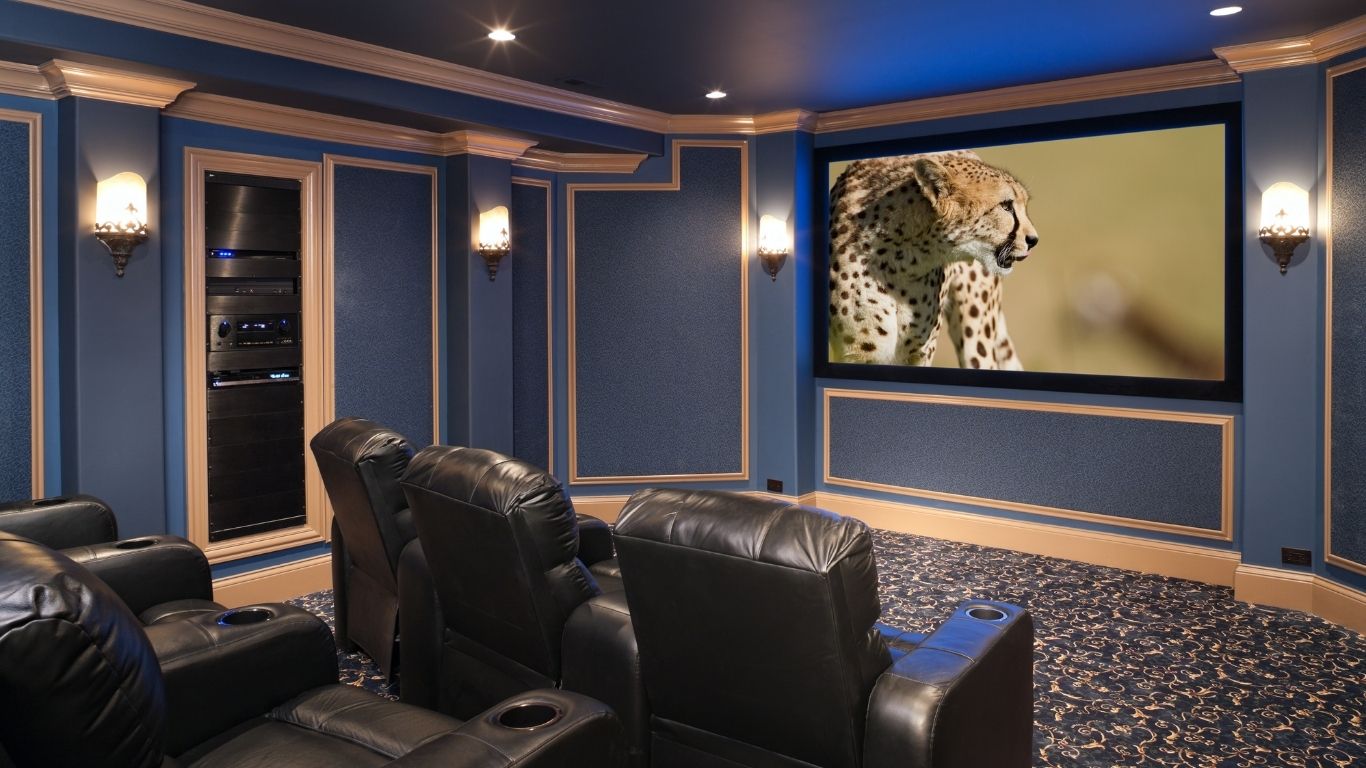
Dedicated theater seats provide comfort for extended viewing (recline, include cup holders). Standard furniture costs less but isn’t optimized for theater angles. Bean bags work for kids’ spaces.
Optimize sight lines for all seats. Stadium seating (risers elevating rear rows 6-12 inches) solves sight line problems. Allow 24-30 inches bar length per seat.
Complete darkness is ideal, but flexible lighting is needed. Dimmable overhead lighting allows bright light for setup, subdued for movies. Step lighting along aisles provides safe navigation without disrupting viewing. Sconce lighting on side walls adds ambiance.
Basement windows require blackout treatments. Light leaks around doors need weatherstripping and sweeps.
Design and Aesthetics
Home theaters can be purely functional or designed to impress visually.
Wall Treatments
Dark walls (charcoal, black, deep brown) reduce light reflections that wash out projected images. Matte finishes prevent reflections better than glossy paint.
Fabric wall panels serve a dual purpose: they absorb sound for better acoustics while providing an upscale appearance. These can cover large wall sections or be incorporated as accent treatments.
Some theaters feature architectural details like columns, crown molding, or decorative soffits that create ambiance without interfering with acoustics or equipment.
Ceiling Design
Drop ceilings provide easy equipment access and can incorporate acoustic tiles. Modern systems look much better than older commercial-style drop ceilings.
Drywall ceilings with coffers or trays add architectural interest. Plan equipment locations carefully since accessing components after drywall installation requires cutting holes.
Painted joists and black ceilings create a contemporary industrial aesthetic while maintaining equipment access. This works best when ductwork and utilities are neatly organized.
Flooring
Carpet is traditional theater flooring. It absorbs sound, feels comfortable underfoot, and provides an appropriate aesthetic. Choose a durable carpet designed for heavy traffic if your theater gets significant use.
Luxury vinyl plank offers easy maintenance and moisture resistance superior to carpet. Area rugs in seating zones provide acoustic benefits while maintaining easy-clean floors.
Budget Considerations
Home theaters range from modest to extravagant, depending on equipment and finish choices.
Basic functional theaters with entry-level projection, speakers, and simple finishes start around $5,000-10,000 for equipment and basic room finishing.
Mid-range theaters with quality equipment, proper soundproofing, acoustic treatments, and theater seating typically cost $20,000-40,000.
High-end theaters with premium equipment, elaborate finishes, and professional installation easily exceed $50,000-100,000.
Start with good room basics (proper dimensions, soundproofing, lighting control) even if you’re using modest equipment initially. Equipment upgrades easily. Correcting poor room design requires significant expense and disruption.
Making It Work
Successful home theaters balance technical requirements with practical considerations.
Plan adequate power. Multiple outlets on dedicated circuits prevent overload and power issues. Include surge protection for expensive electronics.
Consider equipment heat. Projectors, receivers, and amplifiers generate heat. Adequate ventilation or HVAC prevents equipment from overheating.
Wire management matters. Plan conduit or wire chases during construction. Exposed cables look messy and create tripping hazards.
Include storage for movies, remotes, cables, and accessories. Built-in cabinetry keeps theater spaces organized and functional.
Your Theater Experience
A dedicated basement home theater transforms entertainment at home. No more compromising with TV in noisy family rooms or dealing with public theater inconveniences.
Professional planning ensures your investment delivers experiences worthy of the equipment .Our design approach addresses both technical requirements and aesthetic goals, creating theaters that work beautifully.
Ready to build your dream theater? Contact us to discuss your vision. We’ll assess your basement, explain options for your budget, and create a theater you’ll use for years. Browse our gallery to see projects we’ve completed throughout the Lehigh Valley.