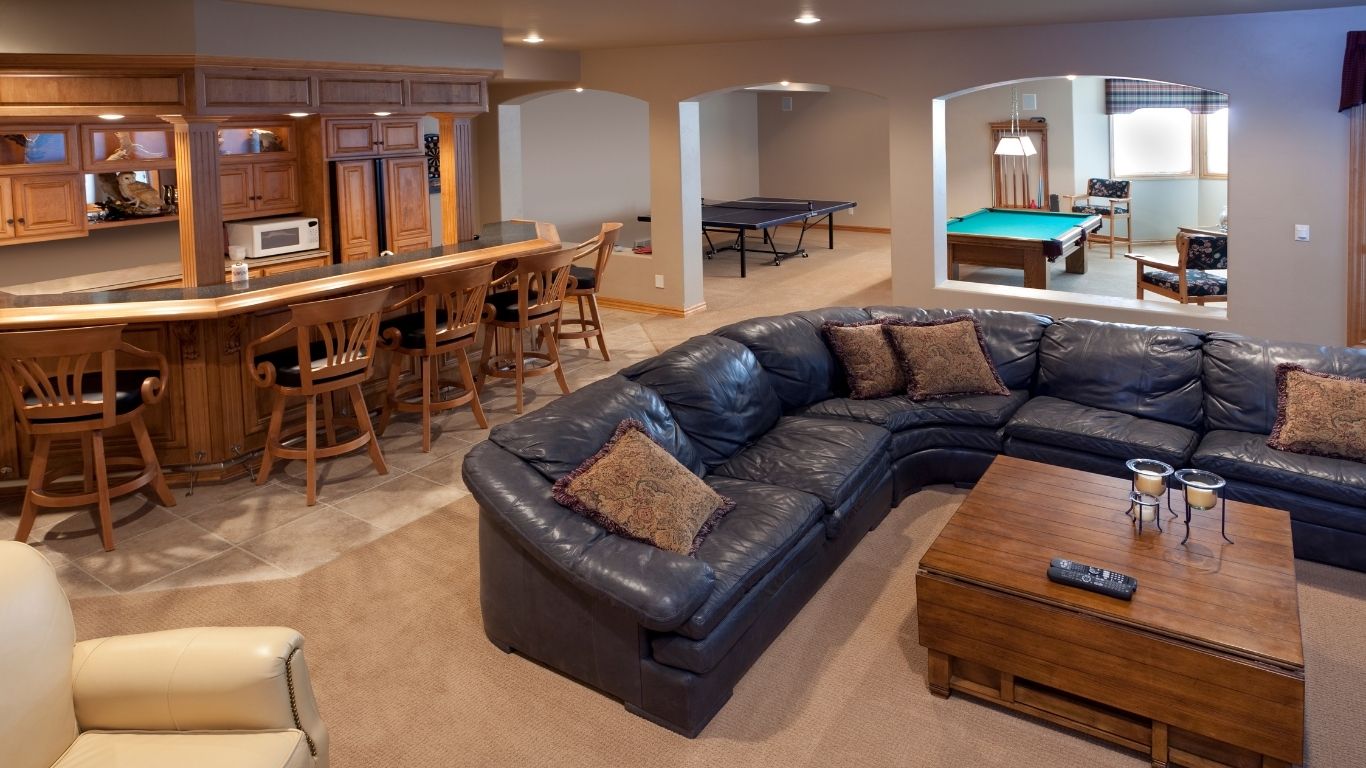
A basement bar turns your lower level into the house’s social hub. Whether you’re watching the game, hosting cocktail parties, or just enjoying a quiet drink at home, basement bar ideas range from simple setups to elaborate entertainment centers that rival commercial establishments.
The best basement bars balance style with function. They provide convenient access to beverages and glassware while creating an atmosphere that makes people want to gather. Let’s explore designs that work in real Pennsylvania basements.
Types of Basement Bars
Wet Bars vs. Dry Bars
Wet bars include a sink with running water, letting you wash glasses and mix drinks without running upstairs. Most measure 6-8 feet long with room for sink, landing space, and a small refrigerator. The sink drain often ties into existing basement drains through gravity. If your bar sits below sewer lines, you’ll need a sewage ejector pump like those required for basement bathrooms.
Dry bars provide cabinetry, a countertop, and storage without plumbing. They cost less and offer more placement flexibility. The tradeoff is convenience. Trips to nearby sinks for water disrupt the entertaining flow.
Full-service bars add built-in refrigeration, ice makers, and extensive storage. Plan 10-15 feet of length and dedicated electrical circuits. These rival commercial bars in terms of capability.
Bar Layout and Dimensions
Standard bar height is 42 inches with 30-inch stools. Counter-height bars (36 inches with 24-inch stools) feel less formal and work better for food service.
Bar depth runs 16-24 inches on the serving side. Add 12-15 inches overhang for seating plus 24 inches behind stools for circulation.
Straight bars fit narrow spaces efficiently. L-shaped bars maximize counter space in corners. U-shaped bars provide maximum area but need larger rooms.
Allow 24-30 inches of bar length per seat. Choose stool styles based on space: backless stools tuck under completely, low-back versions provide support, and full-back stools with arms maximize comfort.
Essential Bar Features
Storage separates functional bars from pretty but impractical ones. Base cabinets below the counter hold bottles and less-used items. Open shelving or glass-front cabinets display glassware and create visual interest. Wine racks keep bottles at proper angles. Stemware racks suspend glasses overhead, saving counter space while displaying them attractively. Pull-out drawers organize bar tools, cocktail napkins, and coasters.
Don’t forget practical storage for extra ice, mixers, and garnishes. Closed cabinets keep these essentials accessible without cluttering display areas.
Refrigeration and Ice
Under-counter bar refrigerators (2-6 cubic feet) run quieter than mini-fridges and maintain consistent temperatures through frequent opening. Small units (2-3 cubic feet) hold beer and mixers for family use. Larger units (5-6 cubic feet) accommodate party supplies.
Built-in ice makers eliminate trips to the upstairs freezer. These require a water supply and drainage but deliver convenience. Compact 15-inch models produce 25 pounds daily. Larger units make 50+ pounds. Consider typical entertaining needs when sizing. Running out of ice mid-party frustrates everyone.
Seating That Works
Allow 24-30 inches of bar length per seat. Closer spacing suits intimate gatherings. More generous spacing works for casual entertaining where guests circulate.
Stool styles affect both comfort and space. Backless stools conserve space and tuck completely under bars. Low-back stools provide support while maintaining open sightlines. Full-back stools with arms maximize comfort but require more room. Match stool height to your bar: counter height (24 inches) or bar height (30 inches).
Bar Back and Display
Tile backsplashes protect walls and add style. Glass tile reflects light. Mirror backsplashes expand space but show smudges. Some skip traditional backsplashes for accent paint or wood treatments.
Floating shelves display premium spirits. Backlit shelving with LED strips adds drama. Balance display bottles with closed storage for everyday items.
Mount TVs at 40-48 inches to center for seated viewing. In-ceiling speakers provide quality audio without consuming counter space.
Lighting and Style
Proper lighting makes bars functional while setting the right mood. Layer different light types for flexibility. Under-cabinet lighting illuminates work surfaces for mixing drinks. Pendant lights over the bar create focal points and provide ambient light. Accent lighting highlights display areas.
Install all lighting on dimmer switches. Bright light helps during setup and cleanup. Dimmed lighting creates an atmosphere during entertaining. Choose warm white bulbs (2700-3000K) that create an inviting ambiance similar to restaurants.
Traditional bars feature dark wood cabinetry, granite or marble counters, and brass hardware. Details like crown molding and raised panel doors reinforce classic style.
Modern bars showcase clean lines with flat-panel cabinetry, quartz or concrete counters, and integrated hardware. Waterfall edges (where countertop material continues down the sides) add visual impact.
Rustic bars incorporate reclaimed wood, natural stone, and vintage elements. Industrial style features metal accents, concrete counters, and Edison bulb lighting. This aesthetic works particularly well in basements where exposed ductwork complements the design.
Budget and Practical Tips
Simple dry bars with stock cabinetry and laminate counters start at $2,000-4,000. Mid-range wet bars, including sink, tile backsplash, and under-counter refrigeration, cost $5,000-10,000. High-end full-service bars with custom cabinetry, stone counters, and built-in ice makers run $15,000-30,000+.
Maximize value by choosing stock cabinetry over custom, using tile backsplashes instead of stone walls, and starting with essentials while adding features over time.
Small details improve daily function. Install outlets with USB ports for charging phones during gatherings. Plan adequate lighting inside cabinets and drawers. Choose countertops that resist staining and scratching (quartz performs better than marble in bar environments). Add a towel bar near the sink.
Display collections that personalize your space: vintage beer signs, sports memorabilia, or travel souvenirs. Stock quality barware, including proper glassware for different drinks, a cocktail shaker, a muddler, mixing spoons, and a jigger for measuring.
Create a comfortable gathering space around your bar. Nearby seating areas, game tables, and TV viewing spots make the entire basement a destination rather than just a drink station.
Your Basement Bar Awaits
A well-designed basement bar transforms how you use your home. It’s the difference between a basement people tolerate and a space they actively choose to spend time in.
Whether you’re planning an elaborate wet bar with all the features or starting with a simple dry bar to establish the space, good design makes the investment worthwhile.
Ready to explore what’s possible in your basement? Contact our team to discuss your project. We’ll help you design a bar that fits your space, budget, and entertaining style. Check out our gallery to see bars we’ve created for other Lehigh Valley homeowners.