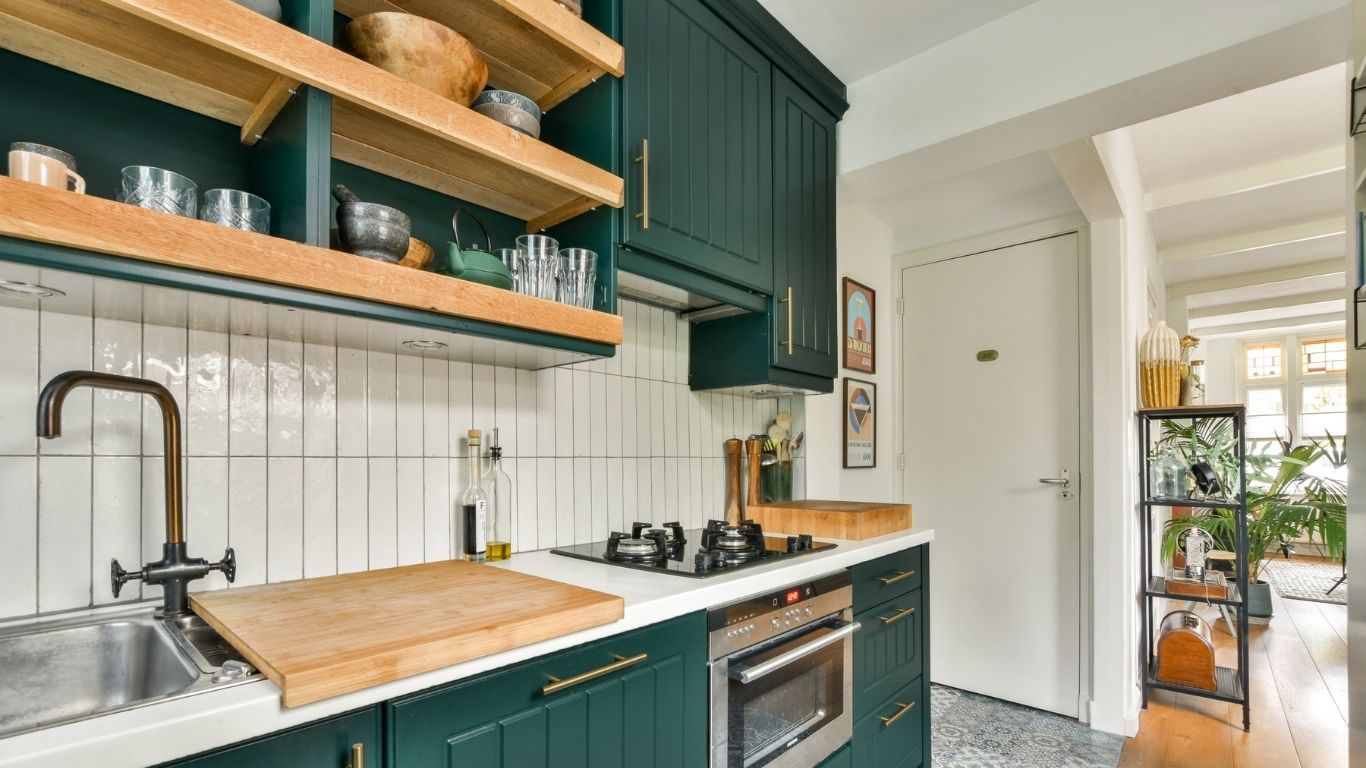
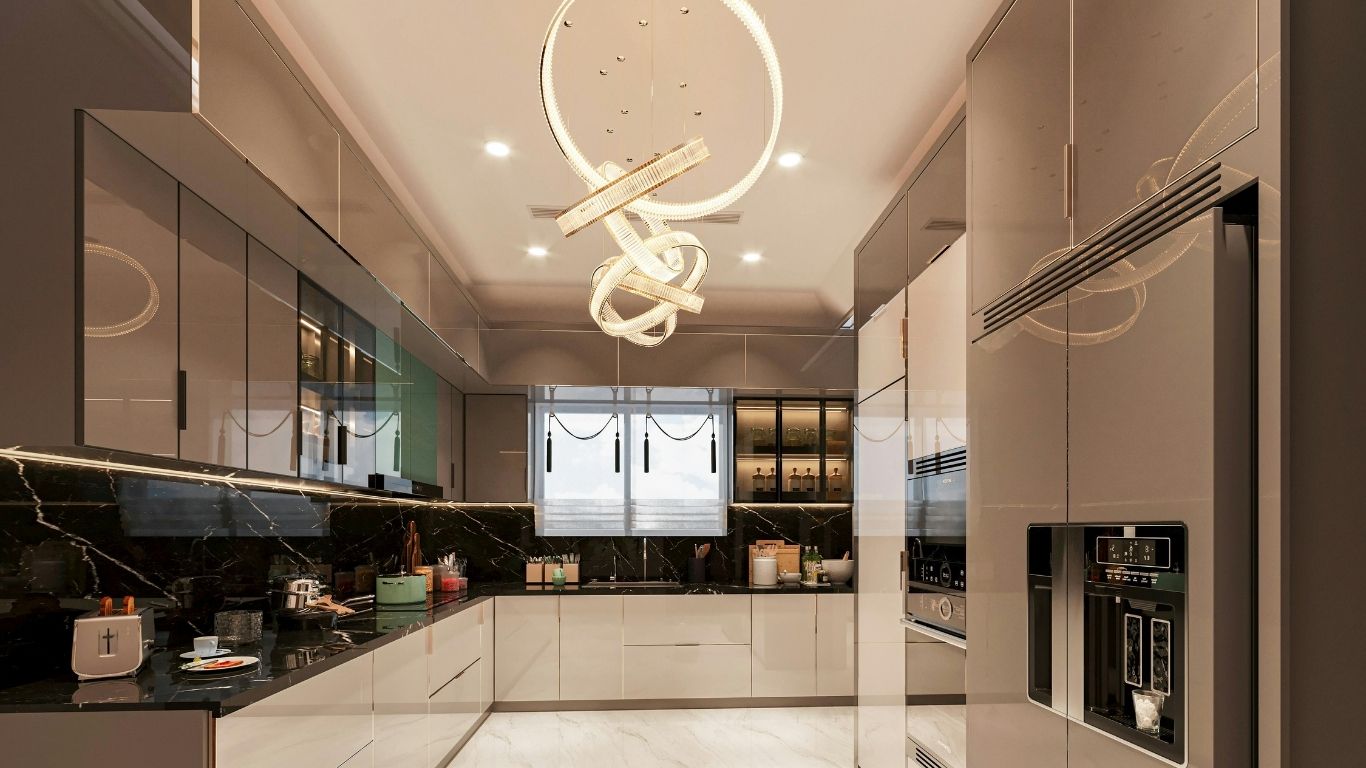
A kitchen renovation in Lehigh Valley, PA typically runs 3 to 5 months from first design meeting to final walkthrough, with luxury projects averaging $60,000 to $150,000 depending on scope, materials, and finish level. The most successful renovations start with a clear budget, a thoughtful design phase that respects the existing layout, and one team accountable for the entire build instead of stitching together a separate designer and contractor on your own.
If you’ve been thinking about a kitchen renovation in Lehigh Valley, PA, you already know the kitchen does more than feed your family. It anchors your home’s value, hosts every dinner party, and quietly shapes your morning routine. A well-planned renovation should solve real problems (worn finishes, dated cabinetry, undersized storage, inefficient lighting, fixtures that have aged out) while elevating the space into something genuinely beautiful.
We’ll review:
- Budgeting
- Design and build sequence
- Material selection
- Timelines
- Permits
- How to choose the right partner. It’s written for homeowners in Allentown, Bethlehem, Easton, and the surrounding Northampton, Lehigh, and Bucks county communities who want a high-end result and a process that doesn’t unravel halfway through.
A note on scope before we start. This guide covers renovation work, meaning updates within the existing kitchen footprint. Cabinets, countertops, appliances, lighting, flooring, fixtures, and finish work all fall within the renovation scope.
How Much Does a Kitchen Renovation Cost in the Lehigh Valley?
For most homeowners in Northampton and Lehigh counties, a meaningful kitchen renovation runs $60,000 to $150,000, with the wide range driven by kitchen size, cabinet quality, countertop selection, and appliance package. The 2025 Houzz Kitchen Trends Study reports a national median spend of $60,000 across all kitchen renovations, with the top 10% of homeowners spending at least $200,000 on the highest-end work.
Lehigh Valley pricing tends to track Middle Atlantic regional averages, which sit slightly above national medians because of skilled-trade labor costs. The Journal of Light Construction’s 2024 Cost vs. Value report notes that minor mid-range kitchen renovations return roughly 96% of cost at resale nationally.
A few common cost benchmarks for a luxury PA kitchen renovation:
- Cabinetry alone often represents 30 to 40% of the total project budget
- High-end appliance packages (Wolf, Sub-Zero, Miele, Thermador) typically run $25,000 to $60,000+
- Premium countertop materials like quartzite or marble can cost $150 to $300+ per square foot installed
- A proper layered lighting plan runs $5,000 to $15,000+ installed
For a deeper breakdown of where every dollar goes in a PA kitchen renovation, read kitchen renovation cost in Pennsylvania guide with current 2026 pricing.
What’s the Real Process of a Kitchen Renovation?
Most homeowners only do this once or twice in their lives, so the sequence is unfamiliar territory. Here’s how a luxury kitchen renovation actually unfolds when handled by an experienced design-build firm.
Phase 1: Discovery and Vision (2 to 4 weeks)
The first phase isn’t about cabinets or countertops. It’s about understanding how you live. A skilled designer will ask how you cook, how often you entertain, who uses the space, where coffee gets made, where the dog eats, and where homework happens. From those answers, a working program emerges: must-have features, design direction, and a realistic budget range.
This is also when budget conversations get specific. Vague numbers (“maybe $100,000?”) become structured allowances for cabinetry, countertops, appliances, flooring, lighting, plumbing, and labor. Without that breakdown, every later decision turns into a guessing game.
Phase 2: Design and Selections (4 to 8 weeks)
Once the program is set, the design team produces detailed plans, 3D renderings, and material boards. You’ll select cabinet styles, hardware, countertop slabs, tile, lighting, plumbing fixtures, and appliances. This is where most of the project’s quality is determined, because a beautifully detailed kitchen comes from hundreds of small decisions made together rather than in isolation.
A finished design package includes elevation drawings, plumbing and electrical plans, a cabinet schedule, a finish schedule, and a fixed-cost construction agreement. If your contractor wants to skip any of those, that’s a sign the project is going to drift in cost and scope.
Phase 3: Permits and Pre-Construction (3 to 6 weeks)
Most Lehigh Valley municipalities require a UCC permit for kitchen renovations that touch plumbing or electrical systems. Your contractor pulls the permit, orders cabinets (often a 6 to 10 week lead time), schedules trades, and confirms appliance delivery dates. Our guide on PA building permits for custom homes and luxury additions covers what’s required across Northampton and Lehigh counties.
Phase 4: Demolition and Construction (6 to 10 weeks)
Selective demo of cabinets, countertops, flooring, and finishes; electrical updates; plumbing updates; drywall repairs; flooring; cabinet installation; countertop templating and install; tile; paint; appliance hookup; and trim. Each trade hands off to the next on a coordinated schedule.
This is the phase where homeowners feel the most disruption, and where the value of having one accountable team becomes obvious. When a plumbing rough-in and a cabinet base conflict, you don’t want to be in the middle of a phone call between two firms blaming each other.
Phase 5: Punch List and Final Walkthrough (1 to 2 weeks)
The last phase catches the small items: a paint touch-up, a cabinet adjustment, a piece of trim that needs caulking. A good builder uses a documented punch list and won’t consider the project closed until every item is signed off.
For more specifics on each stage, our kitchen renovation timeline for PA homeowners lays out the calendar week by week.
Should You Choose a Design-Build Firm or Hire Separately?
There are two main paths for a kitchen renovation: hire a designer for plans, then bid those plans to general contractors, or hire a single design-build firm that does both. For most Lehigh Valley homeowners pursuing a luxury renovation, the design-build path is faster, more predictable, and produces better results.
In a traditional split, you act as the project manager. You’re responsible for resolving conflicts when the contractor says the designer’s plan won’t work, or when the cabinet maker’s specs don’t match the appliance dimensions. Schedule slippage and finger-pointing are common when no single party owns the outcome.
A design-build firm carries one contract, one budget, one timeline, and one point of accountability. Designers and project managers sit in the same office, talk daily, and have already worked together on dozens of kitchens. When a problem comes up (and one always does), it gets solved internally without a meeting between two firms that don’t trust each other.
How Do You Plan a Kitchen Layout That Actually Works?
Layout matters enormously, even within an existing footprint. Materials can be swapped. A poorly planned layout you’ll fight with for the next 20 years.
A working kitchen layout solves three things: traffic flow, work zones, and storage at the point of use. The classic kitchen triangle between sink, range, and refrigerator still matters, but modern luxury kitchens think in zones (prep, cook, clean, bake, beverage) rather than a single triangle. A walk-in pantry handles bulk storage, leaving the visible cabinetry for daily-use items.
A renovation works within your existing footprint, but small layout refinements can transform how the kitchen functions:
- Replacing a wall of upper cabinets with taller floor-to-ceiling cabinetry to recapture lost storage
- Reorganizing zones so prep happens near the sink and cooking happens near the range
- Adding or upgrading the island within the same footprint
- Reworking pantry storage with pull-outs, drawer banks, and specialty inserts
- Pulling the appliance package forward so doors and drawers don’t conflict with each other
For more on opening up the look and feel of a kitchen without structural changes, our open concept kitchen renovation guide covers strategies that work within the existing layout.
Other layout factors that matter more than people realize:
- A minimum 42 inches of clearance around an island, 48 inches if two cooks will pass each other
- 36-inch deep counters wherever possible (standard is 25.5 inches, but the extra depth changes how the kitchen feels and functions)
- Plumbing fixtures positioned so future replacement is straightforward
- A landing zone of at least 15 inches on either side of the cooktop and refrigerator
What Are the Most Important Material and Design Decisions?
Once the design is set, the material decisions stack up fast. Here are the categories that move the needle on both quality and cost.
Cabinets
Cabinets typically eat 30 to 40% of the budget and dominate the visual character of the kitchen. The choice between stock, semi-custom, and fully custom cabinetry comes down to layout flexibility, material quality, and lead time. For most Lehigh Valley luxury renovations, custom or high-end semi-custom is the right answer. Our deep dive on luxury kitchen cabinet styles for a PA renovation walks through Shaker, slab, inset, and beaded options, plus the wood species and finish choices that age well.
Countertops
Countertops are the second most visible surface and they get touched constantly. The major options (quartz, quartzite, marble, granite) each have a clear use case. According to Houzz’s 2025 trends data, engineered quartz remains the most popular choice at 39% of installations, with granite at 19% and quartzite at 11%.
The Island
In a luxury renovation, the island isn’t a nice-to-have. It’s the social center of the home. Houzz reports that more than half (52%) of upgraded islands now exceed 7 feet in length, and waterfall edges, contrasting materials, and integrated seating are mainstream.
Appliances
Appliance package decisions should happen early in design, because they drive cabinet sizing. A 48-inch range with a paneled hood, a built-in column refrigerator, two dishwashers, and a built-in coffee system are common in PA luxury kitchens. The NKBA 2026 Kitchen Trends Report notes that 72% of homeowners now prioritize smart, spacious refrigerators, and 85% want powerful vent hoods.
Lighting
Layered lighting (recessed, pendant, under-cabinet, and accent) separates a custom kitchen from a builder-grade one. The NKBA report identified natural light (95%), quality lighting (93%), and task lighting (92%) as homeowners’ top design priorities. Plan switching, dimming, and circuit layout during design, not in the field.
Flooring
Wide-plank engineered hardwood is the most common choice in Lehigh Valley luxury kitchens. It handles temperature shifts better than solid hardwood and looks at home in everything from a transitional farmhouse to a contemporary new build. Continuous flooring between kitchen and adjacent rooms is a hallmark of well-designed renovated spaces.
How Long Will a Kitchen Renovation Take in PA?
Plan on 3 to 5 months for a thorough kitchen renovation from first meeting to final walkthrough, with active construction taking 6 to 10 weeks. Smaller refresh projects (cabinet doors, countertops, paint, hardware) can wrap in 4 to 6 weeks. Major renovations involving fully custom cabinetry and high-end finishes often run 10 to 14 weeks of construction once permits are in hand.
Cabinet lead time is usually the longest single item. Custom cabinets routinely take 8 to 12 weeks from order to delivery, sometimes longer for specialty species or finishes. The most common scheduling mistake is ordering cabinets after demo starts, which means weeks of empty kitchen waiting for boxes to arrive.
What Permits Do You Need for a Kitchen Renovation in Pennsylvania?
Most kitchen renovations in Pennsylvania require a UCC building permit if the project involves moving plumbing, adding electrical circuits, or relocating gas lines. The Pennsylvania Uniform Construction Code is administered locally by either your municipality or a certified third-party agency.
Common triggers for a permit in most PA jurisdictions:
- Adding new electrical circuits or upgrading the panel
- Relocating gas or water lines
- Adding new plumbing fixtures (a pot filler, a prep sink, a beverage center)
- Adding ventilation that ducts to the exterior
Cosmetic-only refreshes (paint, hardware, refacing existing cabinets, replacing countertops without plumbing changes) typically don’t require a permit, though local rules vary. Penn State’s Pennsylvania Housing Research Center keeps a current overview of which I-Codes the state has adopted (the 2021 I-Codes took effect January 1, 2026).
A licensed PA contractor will pull the permit on your behalf and coordinate inspections. Working with a registered Home Improvement Contractor under the Pennsylvania Home Improvement Consumer Protection Act is non-negotiable. Russo Design + Build is licensed in Pennsylvania (PA040260) and New Jersey, and pulls every permit as part of the project.
How Do You Choose the Right Kitchen Renovator in the Lehigh Valley?
The single biggest factor in your kitchen renovation’s outcome is who you hire. A few practical filters that separate the firms worth your time.
Look for a documented design-build process. Ask to see how a project moves from first call through punch list. If the answer is vague, that’s the answer.
Verify credentials and insurance. PA contractor registration, NAHB or local builder association membership, current general liability and workers’ comp coverage, and references from completed projects. The Pennsylvania Builders Association and Lehigh Valley Builders Association maintain member directories of vetted firms.
Visit a current job site. A clean, organized site with respectful trades is the best indicator of how your project will run. A messy site is a preview of your future kitchen.
Ask about lead times honestly. The right answer is rarely “we can start next week.” Reputable Lehigh Valley renovators are typically booked 3 to 6 months out for design and another month or two before construction starts.
Look at recent kitchen work. Not just the hero shots. Ask to see kitchens at the 6-month and 2-year marks, where you can judge how the cabinets, countertops, and finishes have held up.
Common Kitchen Renovation Mistakes to Avoid
A few of the most expensive errors we see homeowners make.
Starting demo before cabinets are delivered. A two-week scheduling mistake at the start of a project becomes an eight-week problem at the end. Material delivery should drive demolition timing, not the other way around.
Cheap cabinet boxes with expensive door fronts. A beautiful inset Shaker door on a particleboard box doesn’t last. Spec plywood box construction, full-extension soft-close drawer slides, and dovetailed drawer boxes from the start.
Underbudgeting the lighting plan. Layered lighting is the difference between a kitchen that photographs well and one that lives well. Plan on $5,000 to $15,000+ for a luxury kitchen lighting package.
Choosing finishes in isolation. A countertop slab that looks gorgeous in the showroom can fight your cabinet color in the actual kitchen. Make selections together, in the actual lighting, with all materials laid out side by side.
Forgetting how the kitchen connects to the rest of the house. The flooring, trim profile, paint colors, and ceiling treatments should bridge into adjacent rooms. A renovated kitchen that feels grafted onto the rest of the house ages badly.
Designing only for now. If you’re planning to age in place, plan for it now. Drawer banks instead of base cabinets, easy-reach storage, broader aisles, and lever-style faucets cost the same to spec at design time and matter enormously in 15 years.
Skipping the electrical upgrade. Older Lehigh Valley homes often have undersized panels and limited circuits in the kitchen. A modern luxury kitchen needs dedicated circuits for major appliances, the island, the disposal, and lighting zones. This is the single most common discovery item in PA kitchen renovations.
When Should You Start a Kitchen Renovation in PA?
The best time to start is now, in the design phase. The Lehigh Valley renovation calendar is busiest from spring through fall, which means the firms you’d actually want to hire are typically booked 4 to 6 months ahead for new design work and another 1 to 3 months for construction start. If you want a finished kitchen in time for next Thanksgiving, you should be in design conversations by spring.
The other consideration is supply chain. Custom cabinet lead times have stabilized post-2023, but appliance lead times for high-end European brands can still stretch beyond 12 weeks. Starting early gives you more material flexibility and fewer last-minute substitutions.
Frequently Asked Questions
Is it worth renovating a kitchen in the Lehigh Valley before selling? For most homes, yes for a minor refresh, no for a full luxury renovation done strictly for resale. Angi’s 2024 Cost vs. Value data shows a minor renovation returns about 96% of cost. If you’re staying 5+ years, do the renovation for yourself.
Can I live in my house during a kitchen renovation? Most homeowners do. Plan for 6 to 10 weeks without a working kitchen. A temporary kitchen setup (microwave, mini fridge, induction burner, paper plates) in a basement or garage works well.
Do I need an architect for a kitchen renovation? Not for a renovation within the existing footprint. A qualified kitchen designer working with an experienced builder can handle the design.
What’s the typical deposit for a luxury kitchen renovation? A 10 to 30% deposit at contract signing is standard, with payments tied to project milestones. Be cautious of contractors who want more than 30% upfront.
Should I order appliances myself or through my contractor? Through your contractor, in nearly every case. Specs, dimensions, electrical and plumbing rough-in, and delivery coordination are too tightly linked to handle separately.
Can I renovate only part of my kitchen? You can, and many homeowners do. Refacing cabinets, replacing countertops, and updating appliances can produce a striking result for a fraction of a full renovation’s cost.
Ready to Start Your Lehigh Valley Kitchen Renovation?
If you’ve been thinking about a kitchen renovation in Lehigh Valley, PA, the next step is a conversation. Our team at Russo Design + Build has been creating high-end kitchens across Northampton, Lehigh, and the surrounding counties for years, and we’d be glad to walk through your project, your goals, and your timeline. Call us at (484) 239-8316 or fill out our contact form to start the discovery conversation.